Friday, 27 February 2015

Target Market Research


Target Market Research

The target audience for this project are young drivers around the ages of 18-24 to help them become more aware of road safety and those are the people I want the mini-game to appeal to.

Multiple road safety problems are associated with quite a few younger drivers such as drink driving, speeding and having plenty of objects to distract them from the road.

With mobiles being widely accessible and having a higher usage compared to other devices, making the game for a mobile device will allow for the message of road safety to reach a wider demographic.

For young people in general, what attracts them the most to road safety notices are ones that are colourful, while also getting the message across with maybe a single questioning line.
Simple designs using shapes with contrasting colours also prove effective.

Taking a sample of 100 young drivers around the Kidderminster area, I showed them the mini-game ideas I had and asked which situations have they not encountered the most and these were the results:

Being a good passenger: 42%
Road Hazards: 1%
Designated Driver: 57%

As you can see from this sample, the young drivers were least aware of having a designated driver for having a drink out followed by being a good passenger in another person’s car and they were most aware of being careful around road hazards.

With this information, I will be basing my mini-game on designated drivers to help raise awareness of it to more people.


Game App Research


Game App Research

Angry Birds
A simple designed game using a pull and release control with the goal of defeating enemy pigs with as few shots as possible, adding replay value in hopes of attaining a high score. 

The way I could implement this into my game is to make the layout of my game varied by having the characters start at different different points with each loop of the game as well as allowing a limited amount of moves.


Temple Run
A three lane endless runner with the goal of getting as high of a score as you can whilst avoiding the numerous temple traps and collection coins to purchase various upgrades and cosmetics. It's simple gameplay, high replay value and leaderboards are what make this game successful.

I can use this 3 lane concept to make a mini-game based on driving on the motorway and simulate when to switch lanes, if you need to be a certain distance to the vehicle in the front or if you should speed up so you don't block the other drivers.


3D Impossible Parking Simulator 2

This game app is a parking simulator for cars and trucks with intuitive controls for gas, reverse and steering. Each level gets progressively harder and harder.

I could implement similar control inputs to create a parking mini-game in which you have to keep driving until you find a suitable place to park or pay a fine. Locales would include car parks, the sides of a street and a garage.


Candy Crush Saga

Candy Crush Saga is a connect three puzzle game using a limited moves rule to make players think strategically about which move is the best one to hit the score requirements to win the level. Has an addictive replay value in which there are score tiers for each level along with many gimmicks to keep players engaged and generates a staggering amount of revenue through mircro-transactions to gain extra lives.

For the rising difficulty of my mini-game, I can add a small new gimmick or potential distraction after every 3-5 loops such as indicating that all the characters have drunk different amounts of alcohol and the designated driver is the one that is under the legal limit.


100 Floors - Can You Escape?

This game is a room escape puzzle game in which you have to interact with the surrounding environment to unlock the door and move on to even more rooms with varying designs and elements so each way to proceed does not become a tedious task. Additional levels are included with updates so people who have cleared the game have more to go for.

A small puzzle element could be used in turning the ignition and the changing of gears to proceed, as well as checking for potential hazards.


Doodle Jump

Doodle Jump is a platformer game with the goal of ascending as high as you can, using a multitude of randomly generated platforms and power-ups.

As Doodle Jump has different level themes, my mini-game could increase its variation by having different backgrounds, and different visual assets on determining which character is the designated driver or not, such as who has a drivers license or if there are child passengers.

Friday, 21 November 2014

Final Product Evaluation


Final Product

The kind if gaming experience I was aiming for in terms of the reactions I wanted for it to generate, would be the feeling of not knowing where you are going, in a way a blind person would, as was the inspiration from the “Out of Sight” animation.

As for whether my final product succeeded in this regard, I feel it did to an extent.
For why it didn’t work, it was mostly due to the lack of environmental assets for the player themselves would see and limited level design, cramming 3 different environments into one level and also that the level itself is too small and so the experience would go by too fast.

However, what was right were the colours to help set a lonely tone and the fact that my character was a floating light with a pulse that represented the sound reflection range which caused the invisible ground to appear when they ‘touched’ as bats and some blind people get around by sound and touch. The platforming aspect of the game works as well to some degree but for this I would rather have the character move more slowly as rushing blind would be a quick way to disaster.

Some changes to the final product that I would make if I had more time would be; to make the character more humanoid as opposed to being a ball, adding more environmental assets to remove the feeling of empty space helping vary the environment and parallax, make it so when the pulse isn’t touching a platform the platform would disappear and including about 2 or 3 more levels to space the environments out.

Sunday, 16 November 2014

Project Evaluation

Evaluation

As far as I've worked on this project, I feel like I've done a good job trying to get my ideas to work but instead had to make combinations and compromises to meet the deadline.

I've made occasional updates to my blog of my ideas, mostly in bulk as personally, I am unsure of what I should be showing off on it.

All of my ideas had levels of ambition that wouldn't have been possible to fully make with the project time but because of that, I've been able to take elements from some of them into my final product such as the idea of pulses (1st idea) but they are used to activate beacons (initial Construct 2 idea) to make the invisible platforms appear.

What I feel most proud of during the project would be my research on games as an art form, as I was able to generate more ideas after breaking them down a bit and maybe taking the mechanics or artistic style. My 3rd and 5th ideas are examples of this. My inspirations weren't limited to just games as I even got inspiration from an animation called Out of Sight, which was the product of my pulse idea.


Improvements I need to make include being able to generate multiple ideas and try not to stay attached to one, making goals that are realistically achievable within the project time limit, work on annotations between the research and ideas, updating the blog more regularly and improve on the quality of assets.

What makes a game a game?


What makes a game a game?

There is a fine line between what makes a game and what makes an experience with game elements.
A game, is defined by these key features:
  • There must be some form of competition.
  • Rules.
  • Aspects of player actions that influence the game – chance.
  • A goal or objective.

Competition:
There has to be a level of difficulty in getting to the goal, this in turn requires conditions that result in the player losing other than winning and thus the competition stimulates the player to improve and succeed.

Rules:
The rules must define the game and lay out what can be done by the player and what cannot such as; what limits they are bound by and what can they physically do.

Actions that influence the game – chance:
The gaming experience should change depending on how the game is played and the player’s decisions can allow for alternate events.

Goal:
Goals need to be integrated as part of the game and also be defined by the rules.
There must be a level of strategy to meet the victory conditions or requirements to win the game.


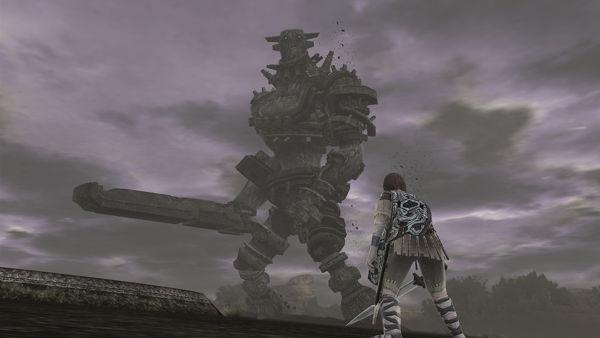
Even though these are the key features that define a game, they can be experiences more than mechanics, for example: Shadow of the Colossus which gives you the goal of slaying twelve colossi; with the player choosing which order they want to eliminate them, but even with these, the main attraction would be the art direction taken to create the vast landscape and the feelings that you get while riding along.
http://images.eurogamer.net/2013/articles/1/5/7/6/6/9/0/136744357158.jpg/EG11/resize/600x-1/quality/80/format/jpg

Wednesday, 5 November 2014

Experimenting with Linocuts


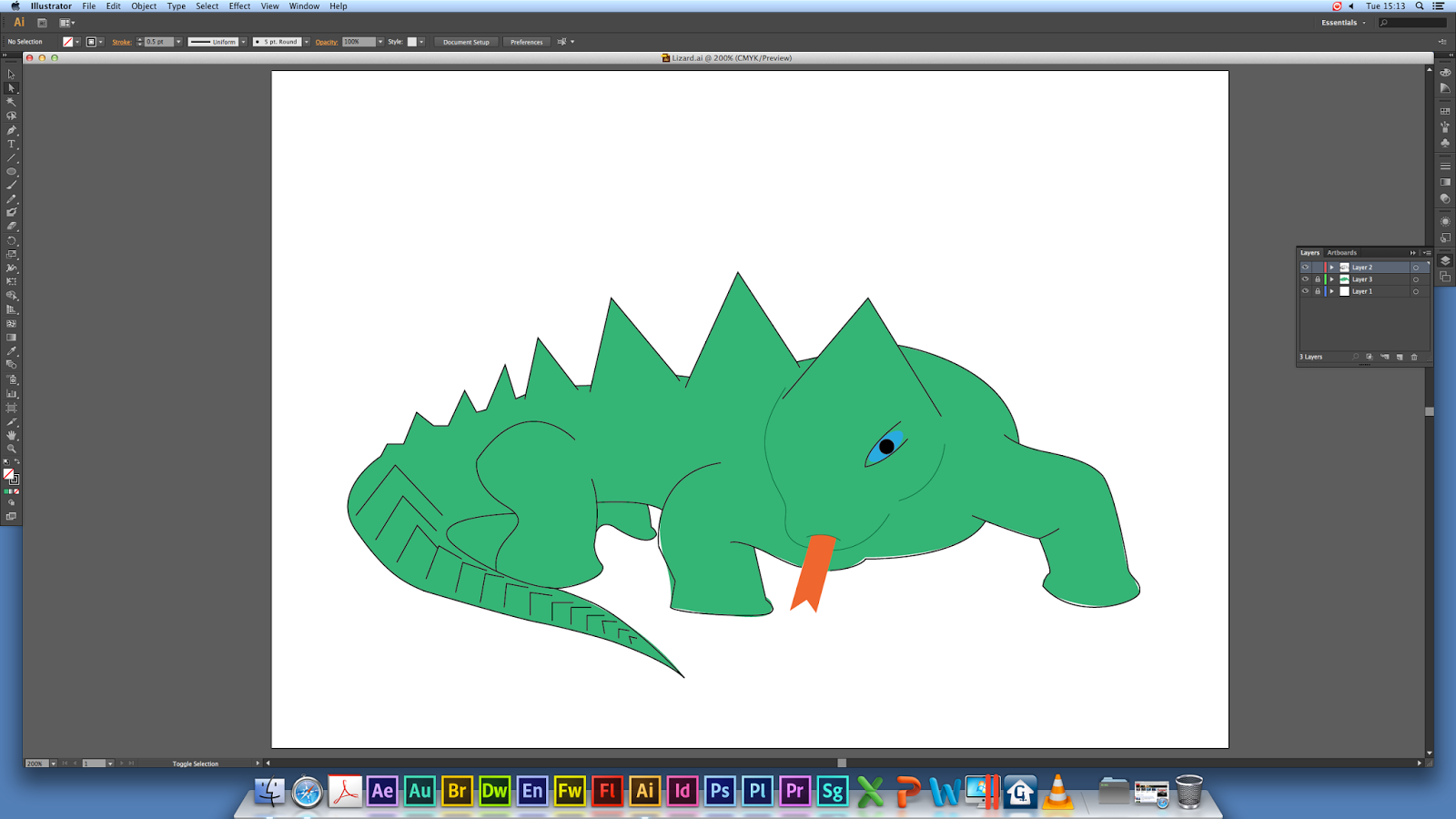
Here we had a go with creating a monster in Illustrator to which we printed out and then applying it into lino. We then proceeded to cut out the shape of the shape of the creature, paint over it using a roller and finally printing it onto a piece of paper.